Build a Venture Fund, Reduce Overhead

Looking to grow your portfolio and team up with other investors to build a new fund? If you are an accredited investor you can leverage a number of equity funding platforms we cover build your own fund. In an effort to compete and scale we have seen these platforms offer reduced overhead costs. This translates to lower fees for you. These investing portals built the infrastructure with innovative approaches to scaling legal and back office administration. As the amount of capital invested in these platforms grow so too does the impact this will have on the overall industry.
As the author I am not an accredited investor myself but believe this infrastructure is soon to come to non-accredited investors like myself.

AngelList Syndicates
AngelList syndicate investing provides infrastructure similar to a venture fund. Simply put if you feel like getting in early and improving the amount of capital behind your investments syndicates are the way to go.
Christian Catalini of MIT Sloan explains syndicates:
Fee Reduction

Historically the 2/20 fee model was fairly standard. This structure results in 2% fee for the overall assets managed and 20% for the carried interest, or positive returns. A syndicate allows investors to participate as a lead investor or a follow on to the lead in exchange for the the lead's carried interest. Carry, short for carried interest, or a share of the profits of an investment that is paid to the managers of the investment. Syndicates eliminate management fees leaving more capital for investment. On average, syndicates invest 97% of the capital they raise. This chart was a break down of the fees back when AngelList made the data public via API.
Access to Rising Star Fund Managers
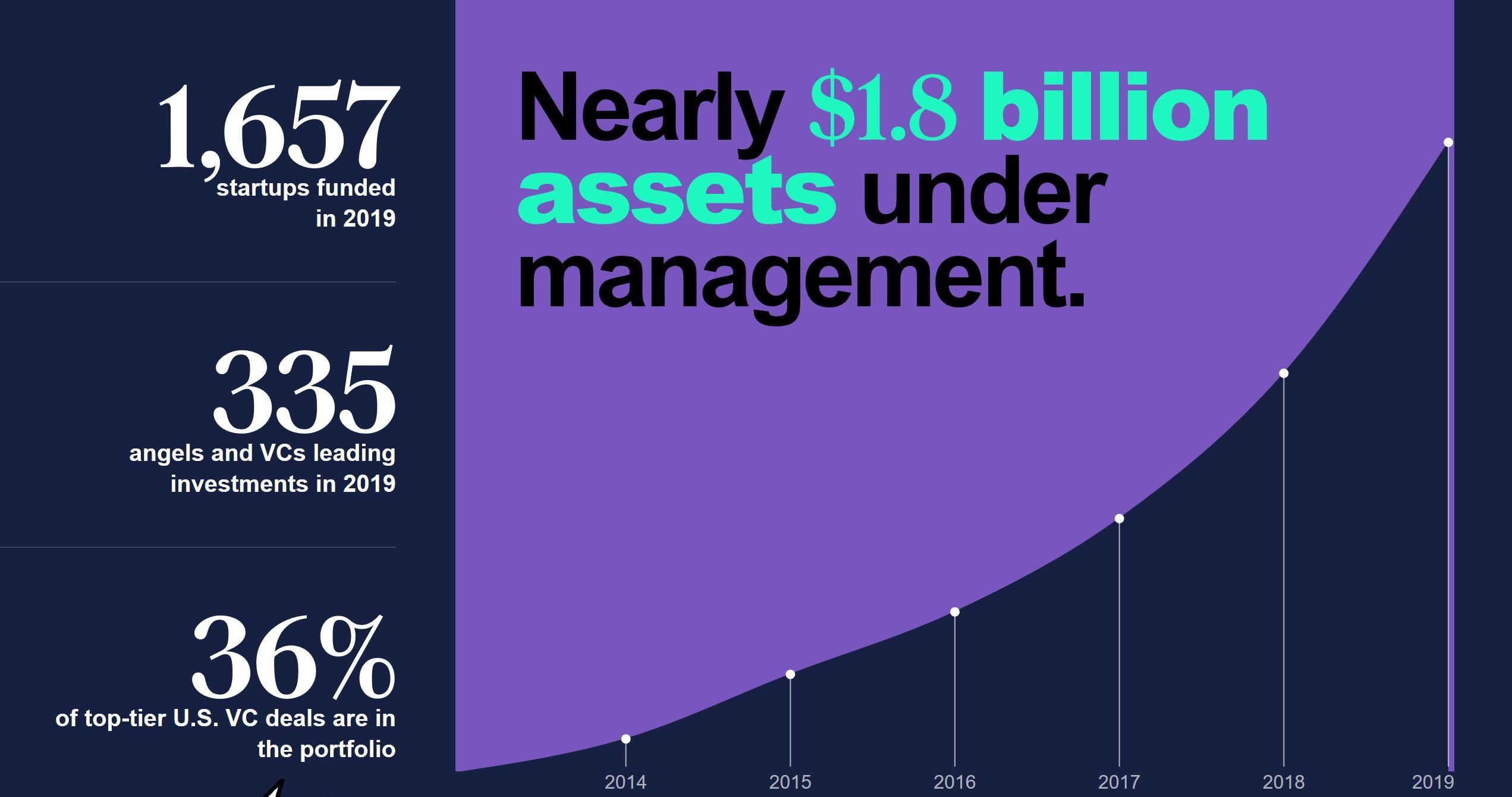
The Syndicate allows a lead investor to create a fund-like structure to have Backers similar to Limited Partners. An individual can create their own or join others. We wrote an in depth article on how to do this. AngelList also wrote an in depth piece on the economics of Syndicates.
As example a lead can have 40 investors with just one signatory on an investment, which helps keep the cap table clean. The syndicates provide pro-rata rights to invest in subsequent rounds. It packages and aggregates angel money into large bundles making it easier for angels to attain rights they might not otherwise have.
One of the major attractions and benefits of syndicates are the deal access that investors receive. Investors get access to a lead’s investments and to the leads professional knowledge and experience. Syndicate Investors get access to fantastic opportunities and exciting deals, leads get carry while start-ups receive vital capital with less hang-ups and cutting down the time involved with the process. It’s a Win-Win for everyone involved.
With AngelList you can chose to invest directly into a particular company, or join a syndicate where you can reduce your risk profile by investing alongside a lead into a group of pre-selected companies. Investors get access to a lead’s investments, therefore their due diligence, and subsequently they receive great benefit from the leads experience in the sector as well as their picking and managing of investments.
Greater Access to Capital
The lead can command 5 - 10x their typical investment dollar amount. Leads can leverage this increased investment amount, giving them access to more deals. It is also possible that the lead can improve their syndicate's investor rights. A lead can enhance their brand as a fund manager. With AngelList leads gain access to a network of potential co-investors who can be experts in a broad range of industries.
And of course the start-up gets the benefit of a lead that makes a large investment along with providing direct access to a diversified and knowledgeable syndicate investor’s network without having to endure lengthy legal proceedings and complexity in their cap table.
Creating a Syndicate
In order to create a syndicate you will have to join and create a profile at angel.co. Once your profile has been created enter information about how many deals you expect to syndicate each year. Commitments start after you syndicate your first deal.
- Make a significant investment in each deal
- Provide an investment thesis for each deal
- Disclose potential conflicts of interest such as warrants
- Review and screen potential investors in each deal
- Sign a side letter making you an independent contractor of AngelList Advisors
- Respond to questions from syndicate investors about their investments
Syndicate investors have to be accredited. The fundraising information for a syndicate deal is only visible to accredited investors who have been invited to participate in the deal; the start-up can limit the information as well as exclude certain investors from observing the deal all together.
- Discuss terms with the lead
- Share information on the raise in a private deal setting
- Invite investors – AngelList affiliated funds are under NDA and are automatically invited to invest in all deals.
- Closing the deal – deals can be closed in as quickly as 72 hours.
The AngelList and Accomplice teams created Spearhead, a platform that helps founders become angel investors with $200K, mentorship, and the potential for up to $1M to invest.
Tax Advantaged Funds and Accounts
 We started to partner with RocketDollar via their Self Directed IRA and 401k product offerings.
At Fund Wisdom we look to help assess technology and market opportunities that lower costs for early stage venture investors. With Masayoshi Son’s Softbank creating mega funds like the $100 billion Vision Fund with more to come behind it we are observing a dramatic shift and opportunity. These large institutional funds generally invest in later stage offerings, or companies that have higher certainty in terms of cash flows. We are observing funds like this and Tiger Global Management continue to move to earlier stage offerings deploying capital in high growth early-stage technology firms in search of higher returns.
Softbank - Mega Funds Affect on Venture Capital

SoftBank is headquartered in Tokyo, Japan and was founded by  Masayoshi Son in 1981, while SoftBank Capital and Investment Advisors are headquartered in London. The Vision Fund was created in 2016. SoftBank started as a multinational telecommunications and technology firm that has become an aggressive early-stage investor in technology companies. It is most well known for its $100 million investment in Alibaba for a 27% stake and $70 million in Yahoo Japan that are valued at a whopping $132 billion and $8 billion respectively at the time of writing this article.
The Vision Fund has invested in Uber ($9.3 billion), ARM Holdings ($8.2 billion), WeWork ($4.4 billion), Flipkart ($2.5 billion), and Paytm ($1.9 billion).
Tiger Global
Tiger Global Management is a hedge fund based out of New York that was started by Coleman Chase in 2001. It has Assets under Management (AuM) of $20 billion. Their private funds generally have a longer horizon of 10-years and are focused on high-growth companies in the internet and technology industry. On October 15, 2018, according to the Financial Times, the team raised $3.75 Billion in only 6 weeks. Private Investment Partners XI is the eleventh venture capital fund the group has raised. They state they will focus on consumer internet, cloud and industry-specific software, as well as direct-to-consumer companies in China, India and the US. According to data provider Preqin, it is the highest venture capital fund to close in 2018 at the time of writing this article.
Some of their most famous investments in the technology industry consist of Facebook (personal social network), LinkedIn (professional social network), JD.com (Chinese e-commerce company), Flipkart (Indian e-commerce company), Spotify (online music streaming), SurveyMonkey (global survey company), Square (mobile payment and service aggregator), Glassdoor (online jobs and reviews), and others.
The team was able to achieve a $3 billion from its 20% stake in Flipkart, the Indian e-commerce giant. This resulted from Walmart acquiring a majority stake in Flipkart in May this year for $16 billion. Lee Fixel from Tiger Global is said to have played a major role in that acquisition.
Apart from that, it is also seeing significant returns from its investment in Glassdoor and Spotify. Glassdoor is set to be acquired by a Japanese HR company, Recruit Holdings for $1.2 billion and Tiger Global invested $50 million for Series E funding in the company in 2013.
Further, after Spotify’s public listing in April this year, Tiger Global is set to reap a big payout as one of its biggest shareholders. Going by the first-day trading price of the company, the 7.2 percent stake of Tiger Global would be valued at $1.9 billion.
Recently, it has invested $17 million in Series A funding at Green Bits, a California-based point-of-sale software company for cannabis retailers, $18 million in Series C funding at ChargeBee, a California-based subscription management SaaS startup, and $51 million in Series D funding at Nestaway, an Indian home rental startup.
Primarily fund managers of this size in assets under management focus on public and later stage companies with consistent cash flows that are less risky and offer a higher return on investment. We are seeing a shift of larger pools of capital in search of returns in high growth firms as compared to public companies with limited growth opportunities.
As more fund managers like Tiger Global and Softbank are investing in high-growth, early stage, technology firms to chase the higher returns we will continue to see changes in the market. Tiger Global focuses on a 10-year investment horizon and thus has sufficient time with its LPs to reap the benefits of these investments. Softbank is flooded with capital from its phenomenal bets in Alibaba and Yahoo Japan and wants to make the most of that capital. So far the strategies have worked but how long will it last?
Conclusion
AngelList is not the only equity funding portal to offer fund creation as can be seen in the title image many others have built similar solutions. We hope you find this helpful and are able to build your own fund on one of these platforms. Let us know about your experiences or feedback in the comments below.